Luna — PMDD Pattern Intelligence
An AI that learns your PMDD patterns — so you stop being surprised by your own cycle.

An AI that learns your PMDD patterns — so you stop being surprised by your own cycle.
Premenstrual Dysphoric Disorder (PMDD) is a severe hormonal mood disorder that disrupts work, relationships, and daily life — cyclically, for years, and often without a diagnosis. On average, people with PMDD spend 12 years seeking answers. Luna is an AI companion that learns your individual symptom patterns over time, so you can prepare instead of react, and finally have the data to advocate for yourself with a doctor.
— Dr. Erin Brennand, CMAJ podcast, citing patient advocacy research.
People with PMDD see an average of six healthcare providers before anyone gets it right. Over a quarter are initially misdiagnosed with another psychiatric disorder entirely — bipolar disorder, generalized anxiety, major depression. Not because their symptoms aren't real. Because there's no test for PMDD. No biomarker. No blood panel that confirms it.
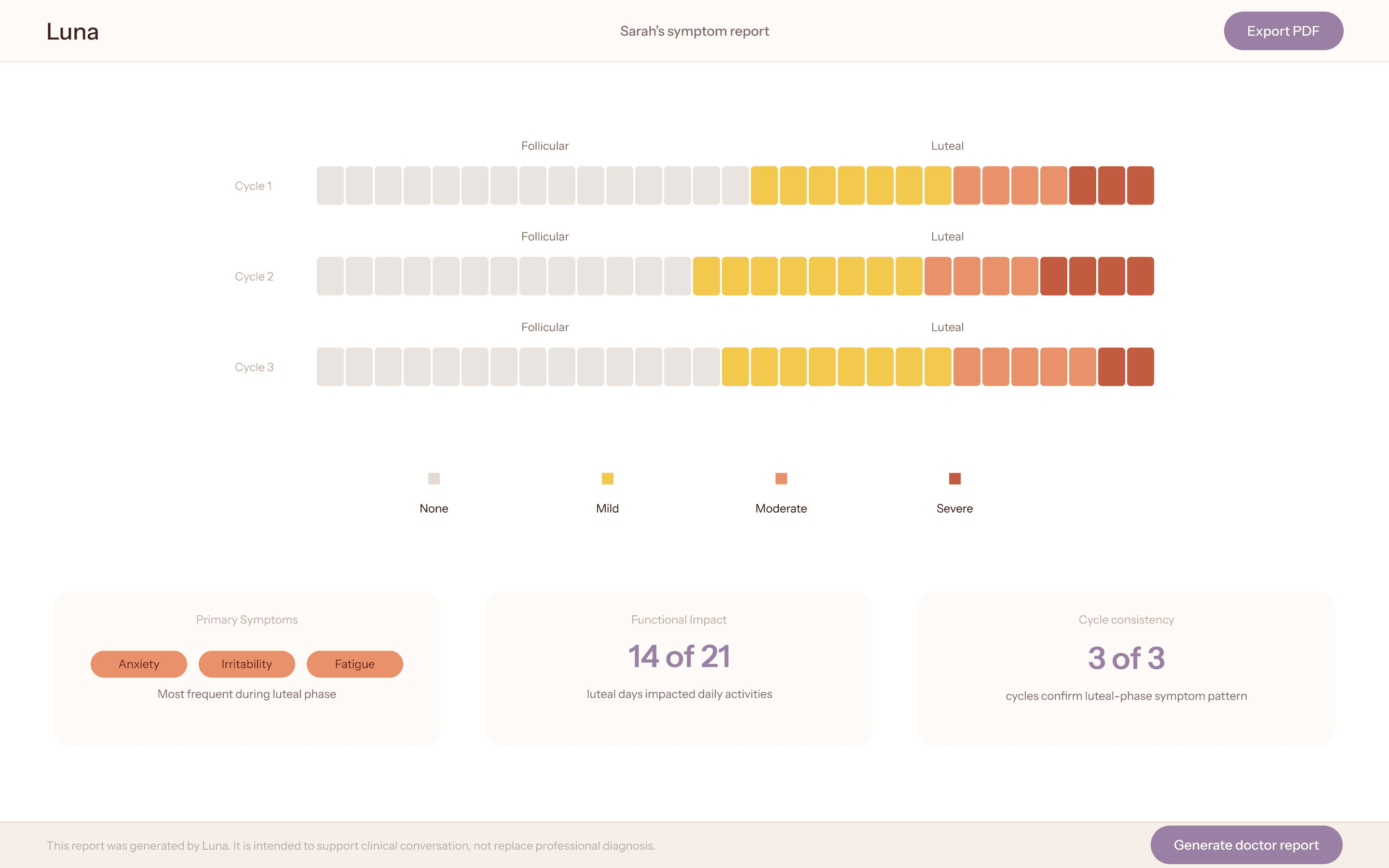
The only path to diagnosis is data. Three months of consistent, prospective symptom tracking is what the DSM-5 requires for a clinician to confirm PMDD. And yet the tools available to do that tracking were never built for this condition.
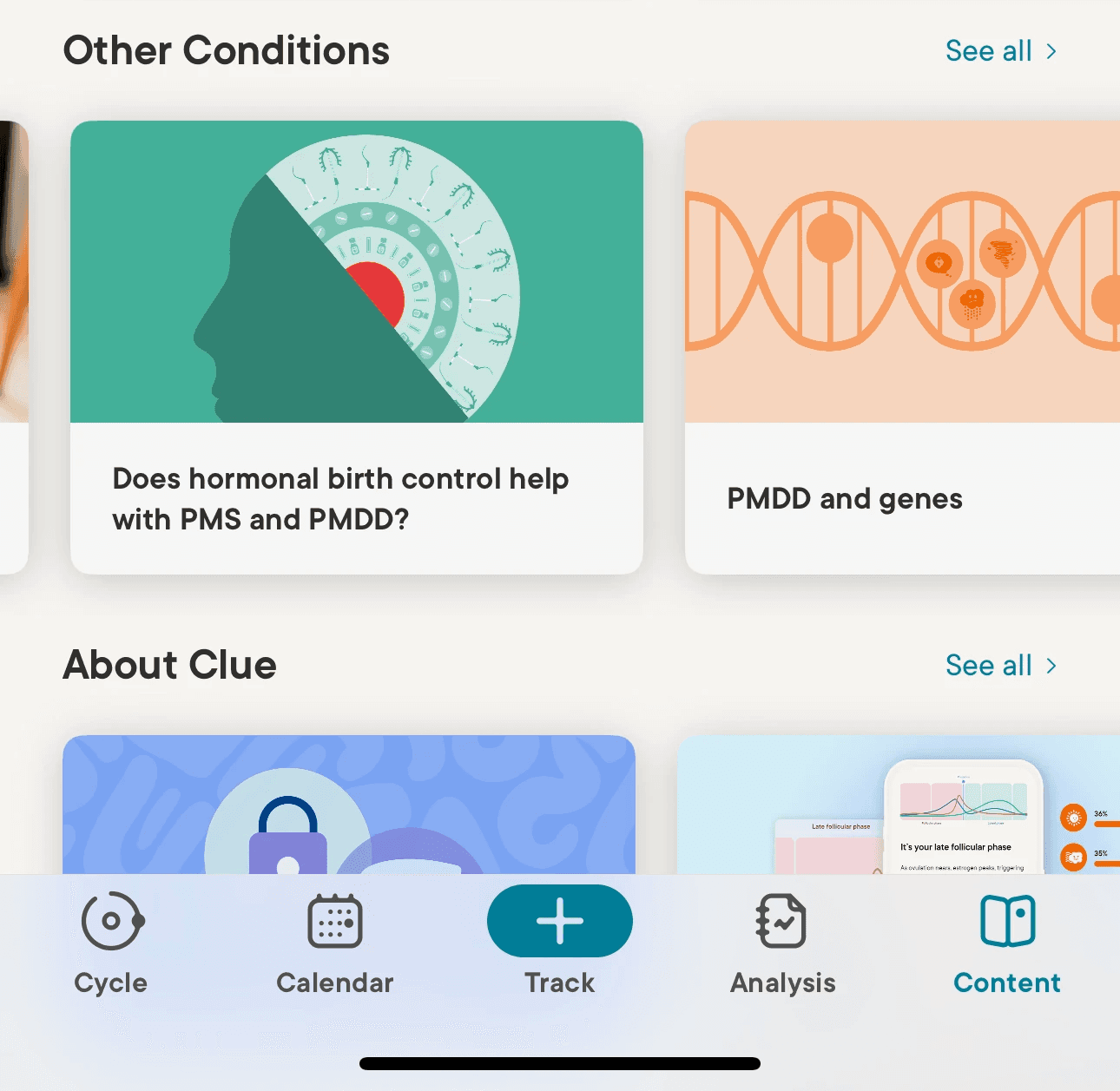
Clue is one of the top period tracking apps on the App Store. It does track symptoms, but it is not specific to PMDD. Its resources on the condition are buried in a content page under "Other Conditions."
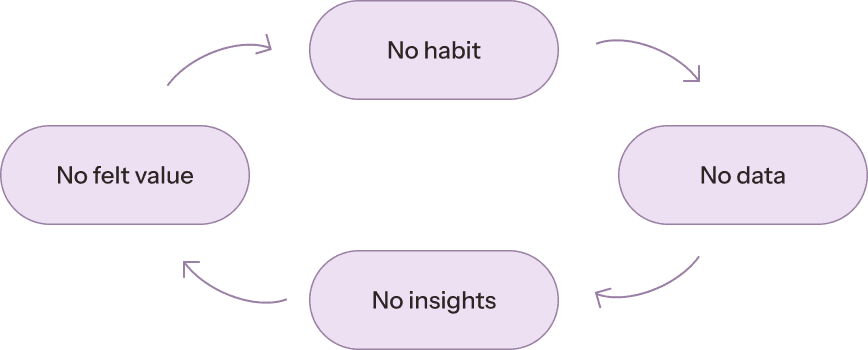
For many people with PMDD, Clue becomes the default tool simply because nothing better exists — not because it was built for them. When the app wasn't designed with PMDD in mind, the entire experience reflects that: generic logging, no PMDD-specific insight, and nothing meaningful to bring to a doctor.

Period trackers tell you when your next cycle is coming. That's what they were designed to do. But PMDD isn't caused by abnormal hormones — research shows that people with PMDD have normal hormone levels. The difference is how their brain responds to normal hormonal fluctuations. That kind of pattern doesn't live in a date on a calendar.
So people do what they can — apps, paper trackers, describing symptoms from memory in a doctor's office. But memory is unreliable. According to PMDD researcher Dr. Erin Brennand, symptom histories reported retrospectively correlate with prospectively tracked data only about 60% of the time. Doctors are working from an incomplete picture.
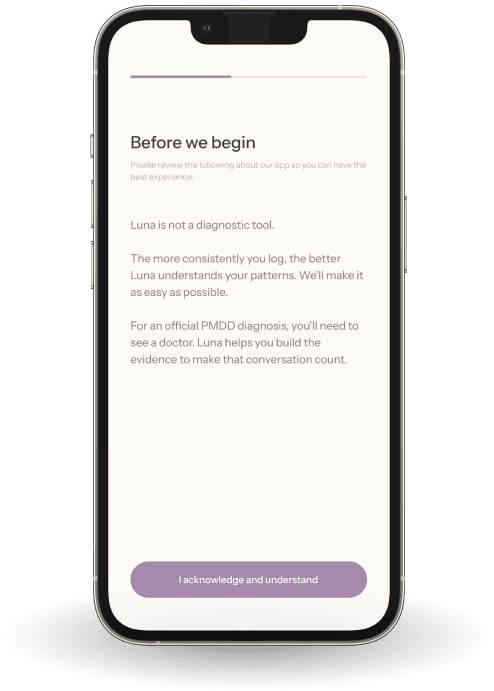
Not by making logging easier. Not by adding more features. By making the return on logging felt earlier — and by reframing what tracking is actually for.
There is no blood test for PMDD. But there is a path to diagnosis — and it runs directly through consistent symptom data. Every entry a user logs in Luna is building the clinical picture a doctor needs to take them seriously. That's not a feature. That's the reason to show up every day.
Before designing anything, I needed to make sure this problem was as real and specific as I understood it to be.

Before I started even thinking about visual design, I spent four sessions in product thinking. The problem was clear. The approach needed to be just as specific.
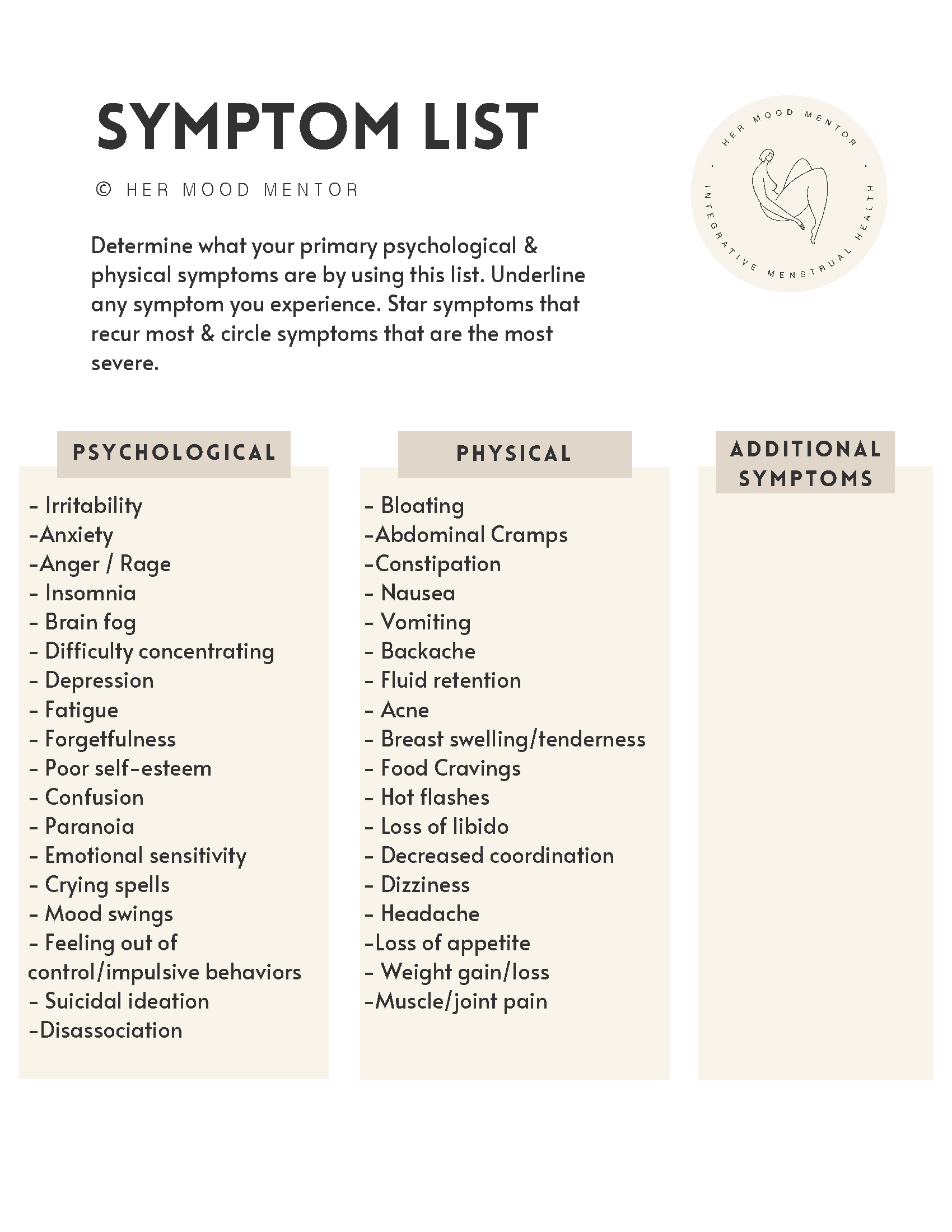
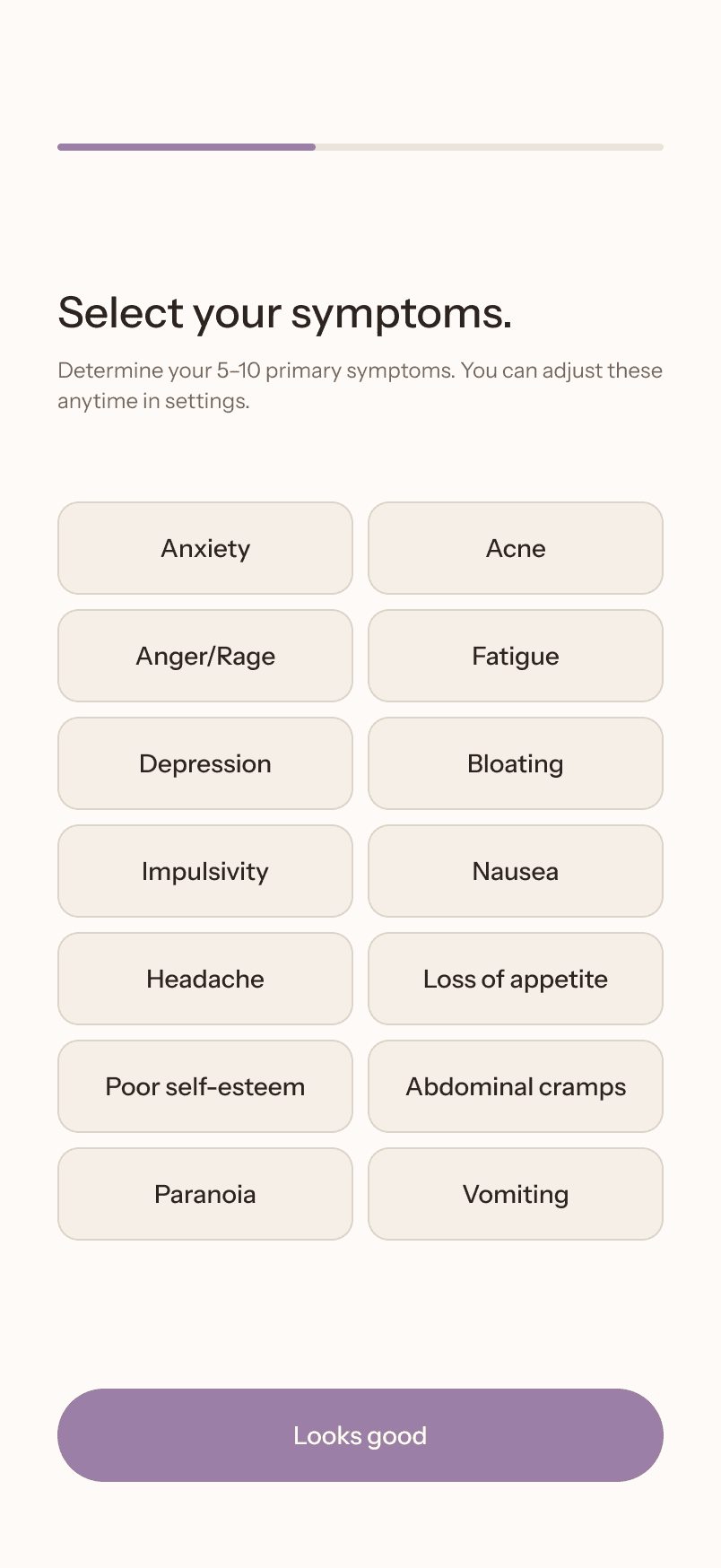
Rather than inventing a symptom taxonomy, I grounded Luna's data model in the Her Mood Mentor Premenstrual Symptom Mapping Kit, developed by Jes Hagan, a certified nutritional therapy practitioner and PMDD specialist. Every symptom category, severity definition, and habit tracking approach in Luna comes directly from an established clinical framework.
One finding from this source reframed the entire product: there is no blood or saliva test for PMDD. Three months of consistent symptom tracking is the clinical path to diagnosis. Luna didn't need to manufacture a reason to log. The reason already existed. It just needed to be surfaced.

The research confirmed two things about PMDD users that became non-negotiable design constraints. If a decision violated either one, it didn't make it into the product.
Minimize cognitive load.
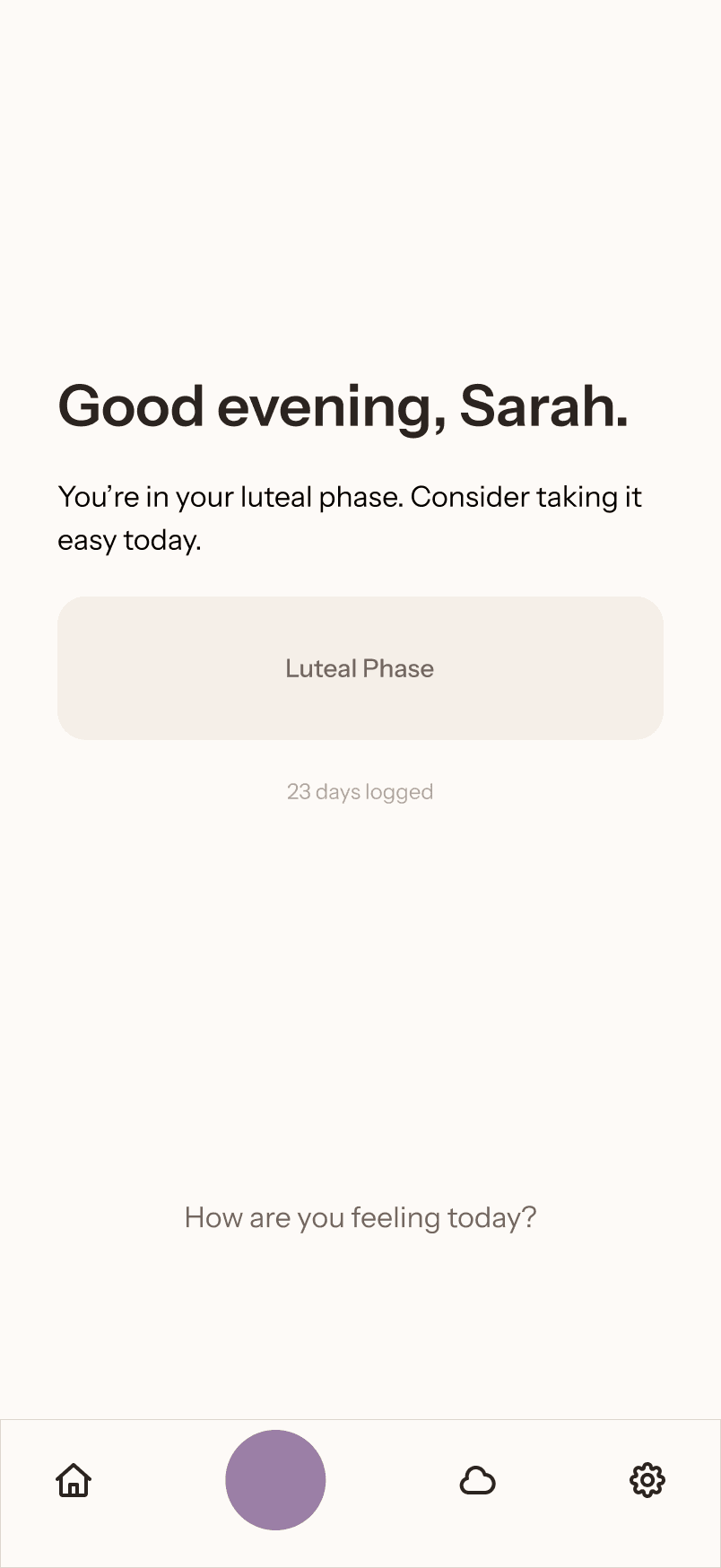
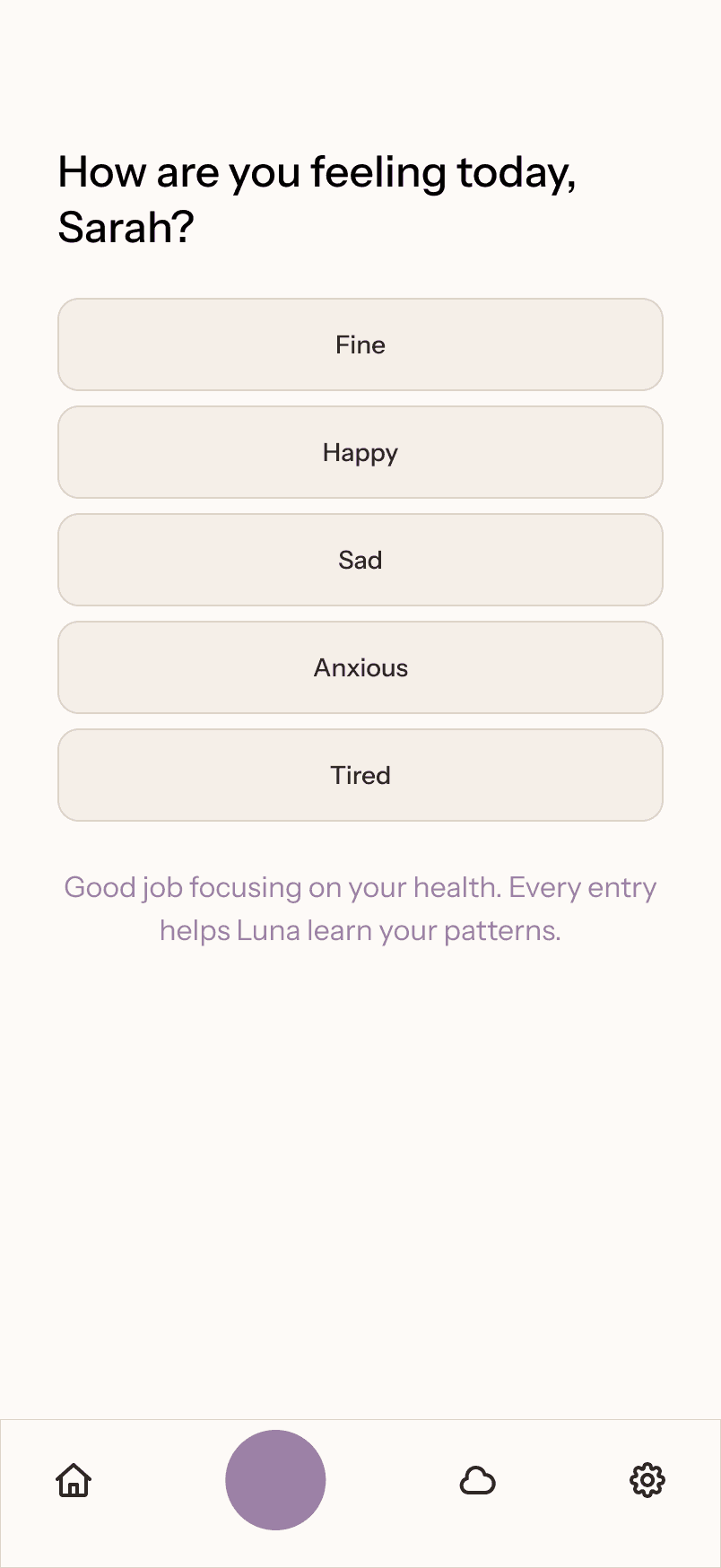
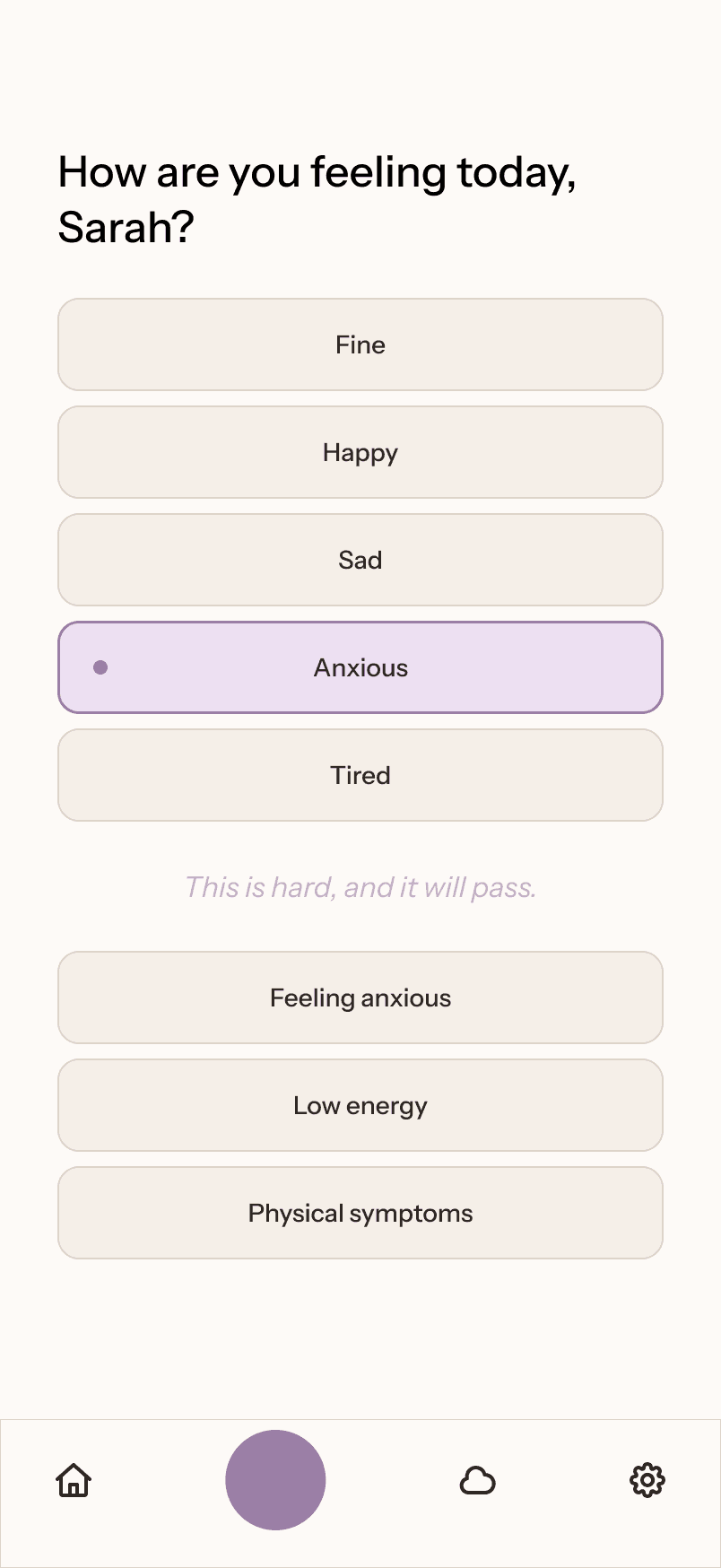
PMDD symptoms include brain fog, fatigue, and difficulty concentrating. The app will often be opened during or near symptomatic periods — the exact moments when thinking is hardest. Every interaction had to be designed for the worst-case cognitive state. A daily log completable in under 30 seconds. One tap as a valid minimum. No feature that required the user to analyze their own data.
Emotional safety.
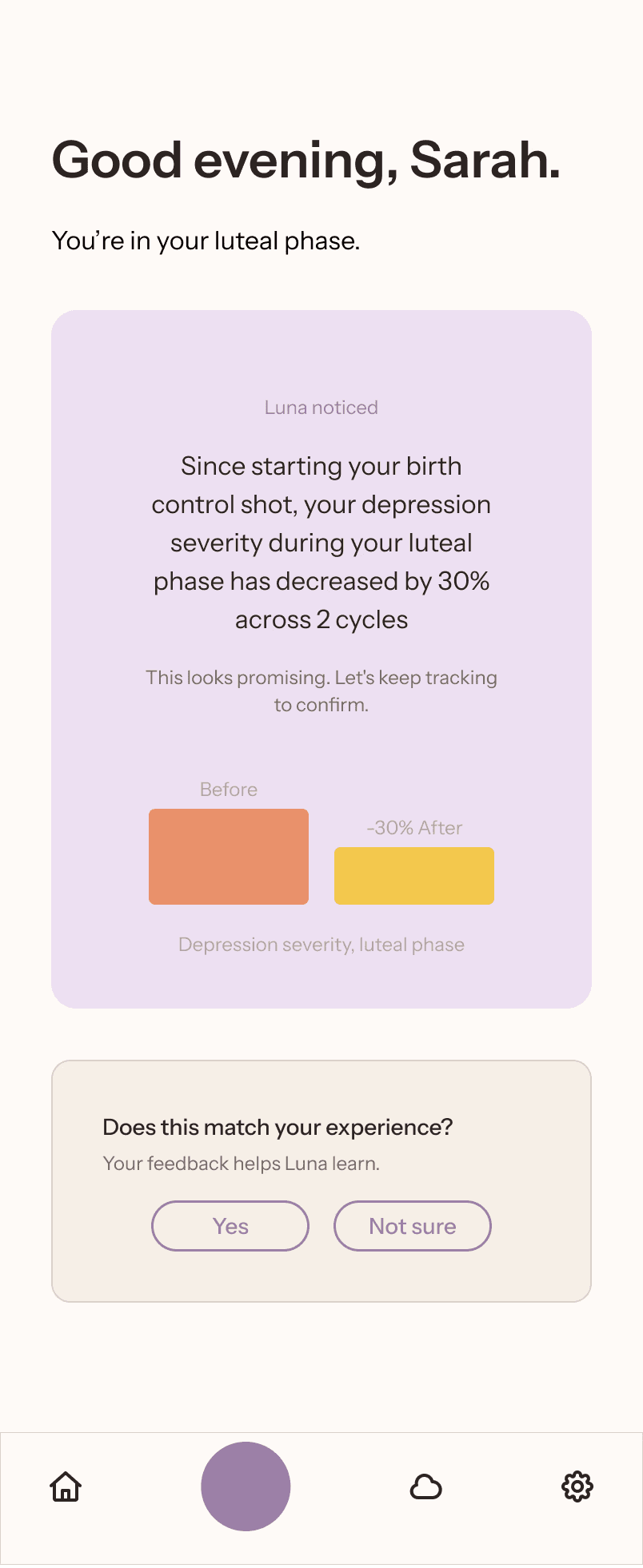
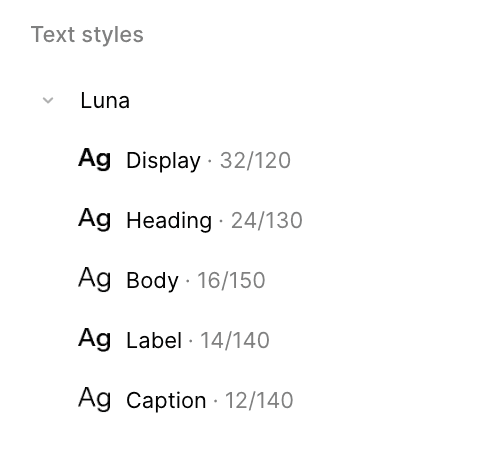
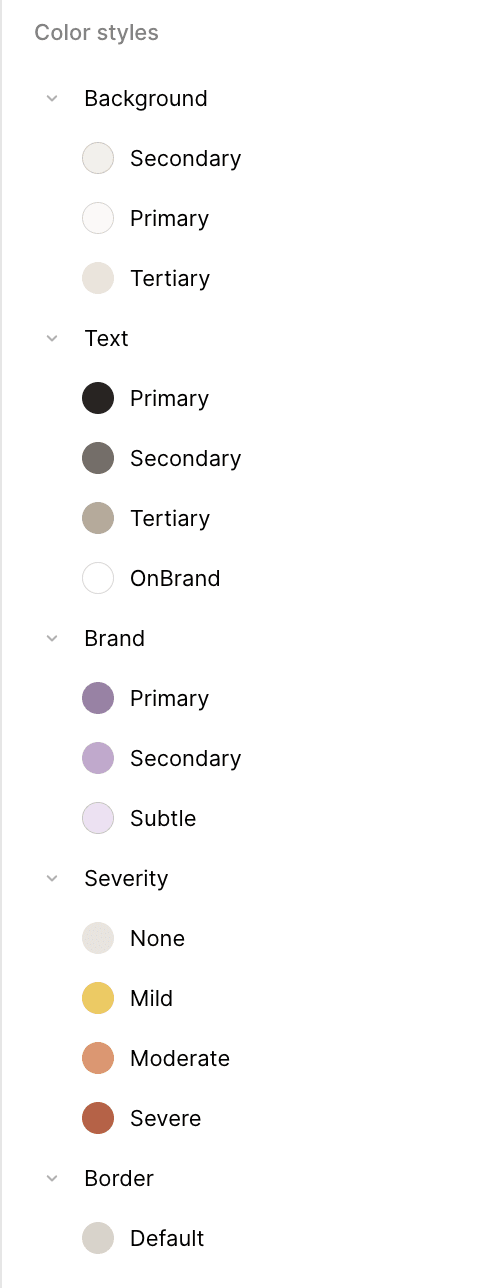
The app never alarms, judges, or creates urgency. Cycle phase language is gentle and action-oriented. The severity scale uses warm terracotta rather than alarming red. The entry counter never resets — missing a day is data, not failure. On bad days, Luna acknowledges before it asks. Every time.
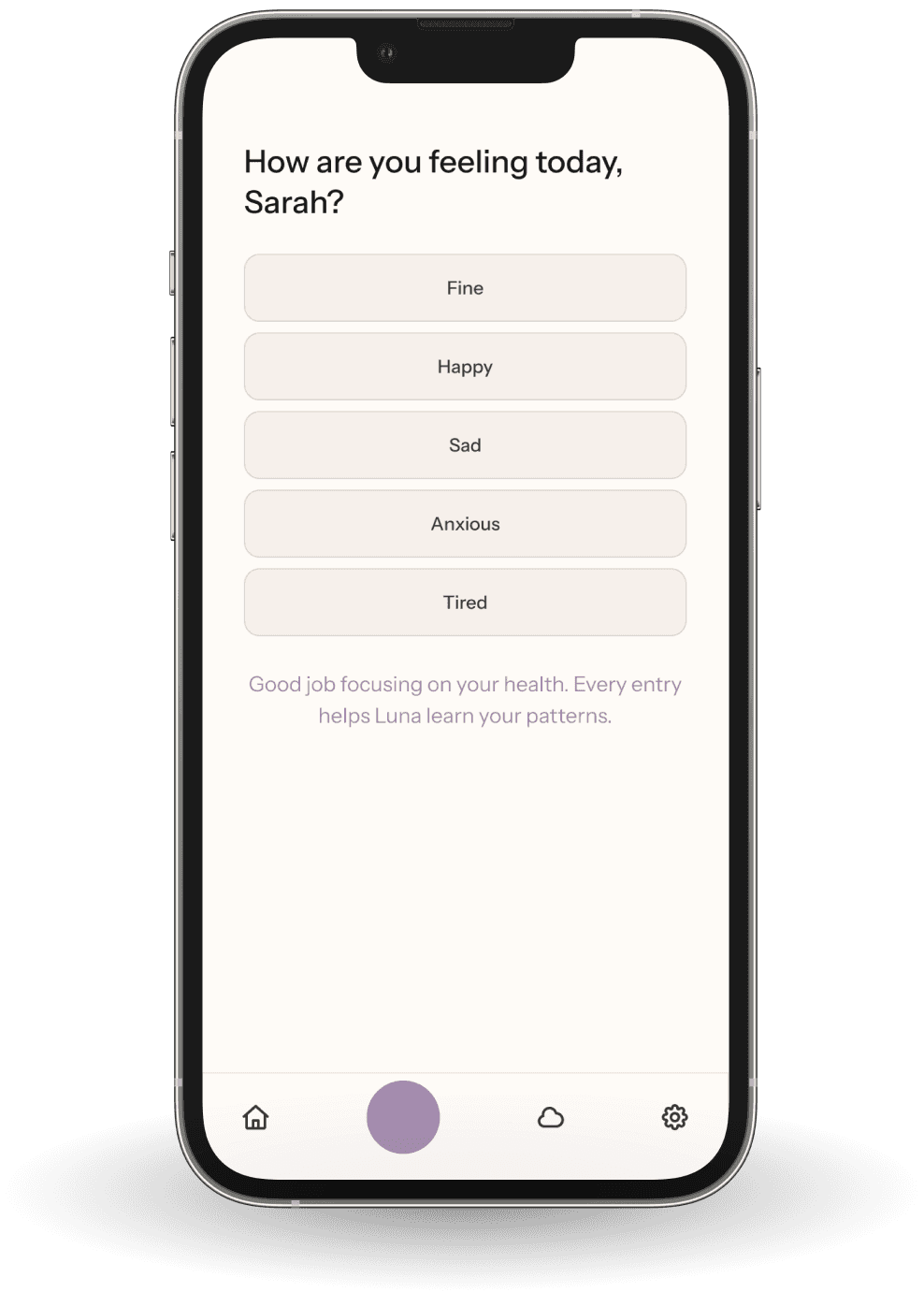

Early on I identified a real tension. Luna needed a community layer — a PMDD-specific space for peer support, shared patterns, and connection. But a community product and a pattern-tracking product are fundamentally different things to design. Doing both in v1 meant doing neither well.
Community is scoped to v2. Once users share the Luna tracking experience, they have something concrete in common: their own longitudinal data. A PMDD community built on top of shared tracking is far more valuable than a generic forum. The community earns its place after the core product exists.
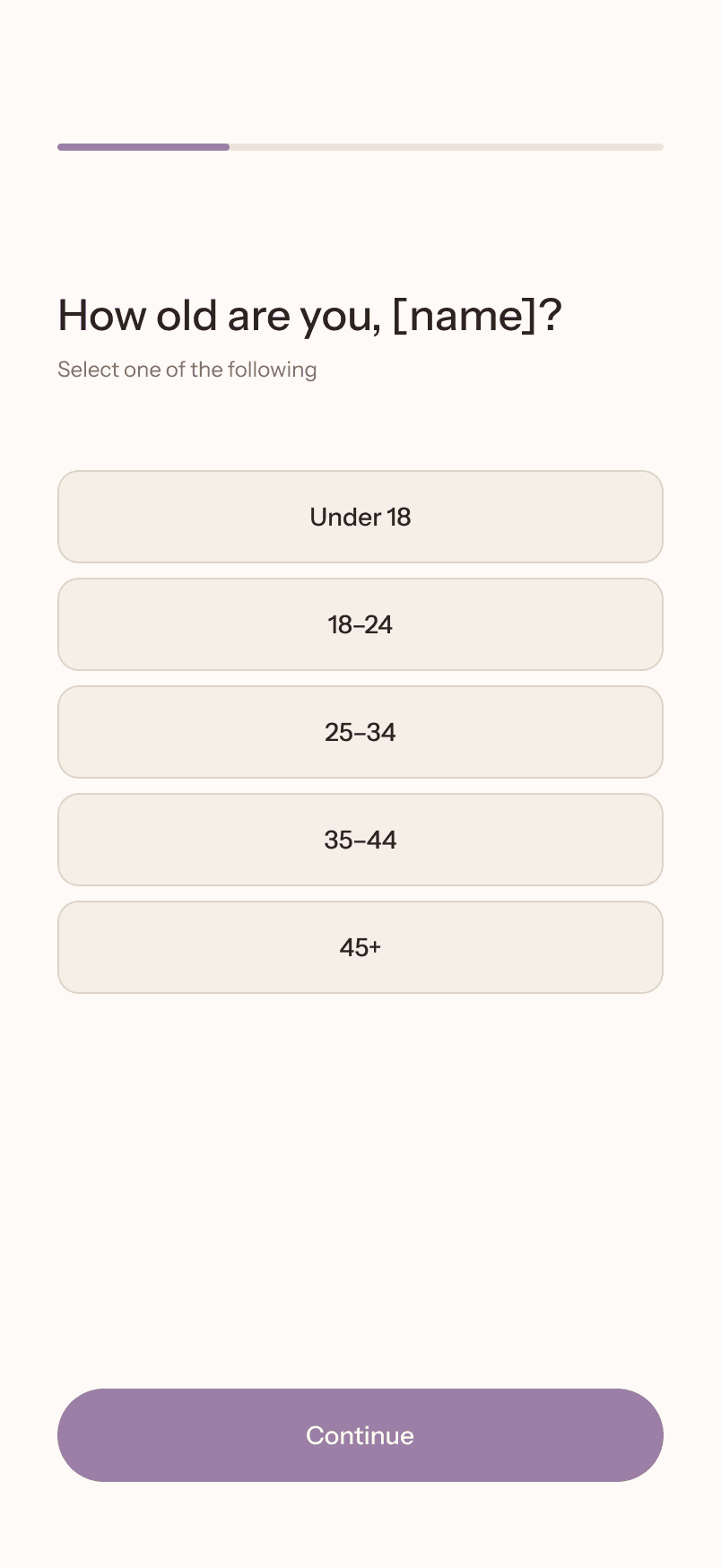
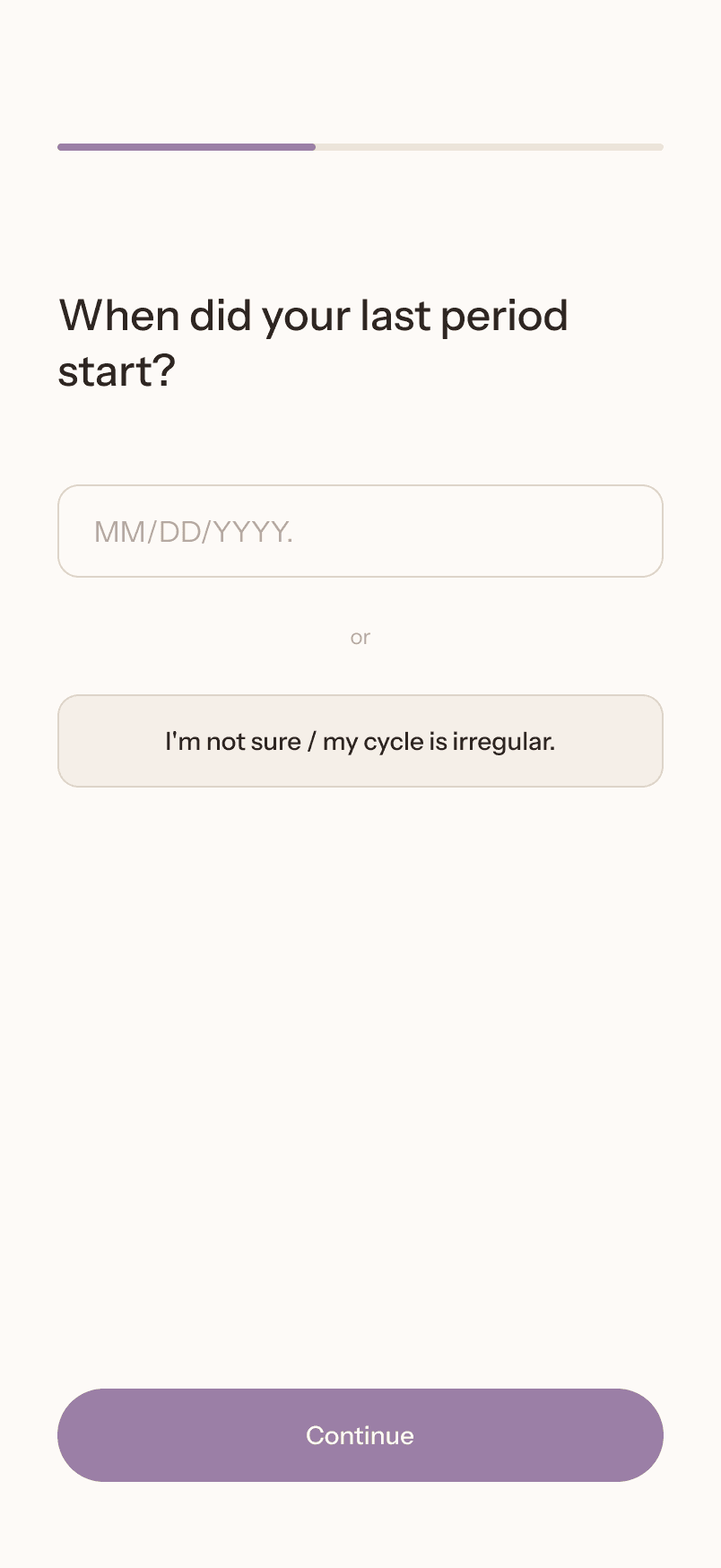
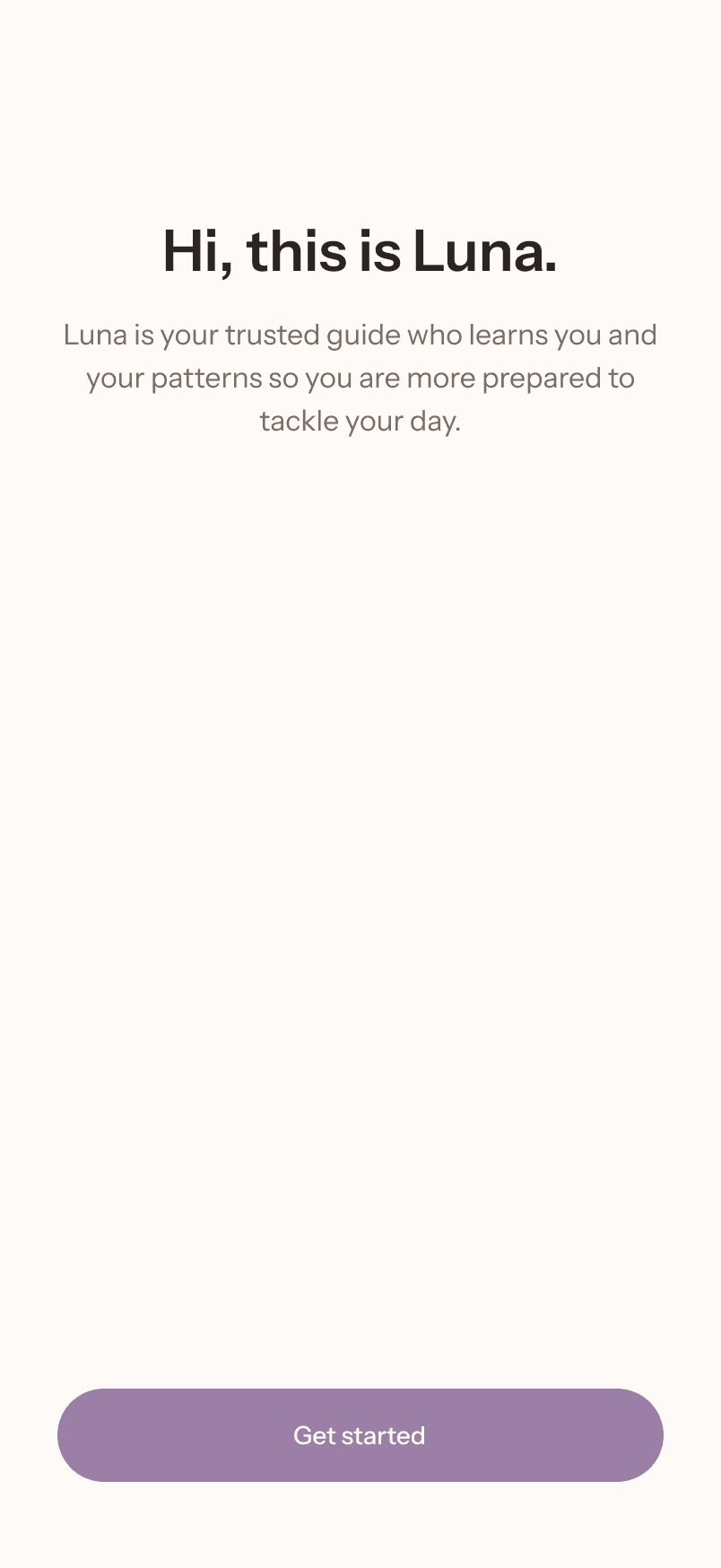
The onboarding flow has one job: get from knowing nothing about the user to having their first log entry — without losing them along the way. Eight screens, each earning its place.
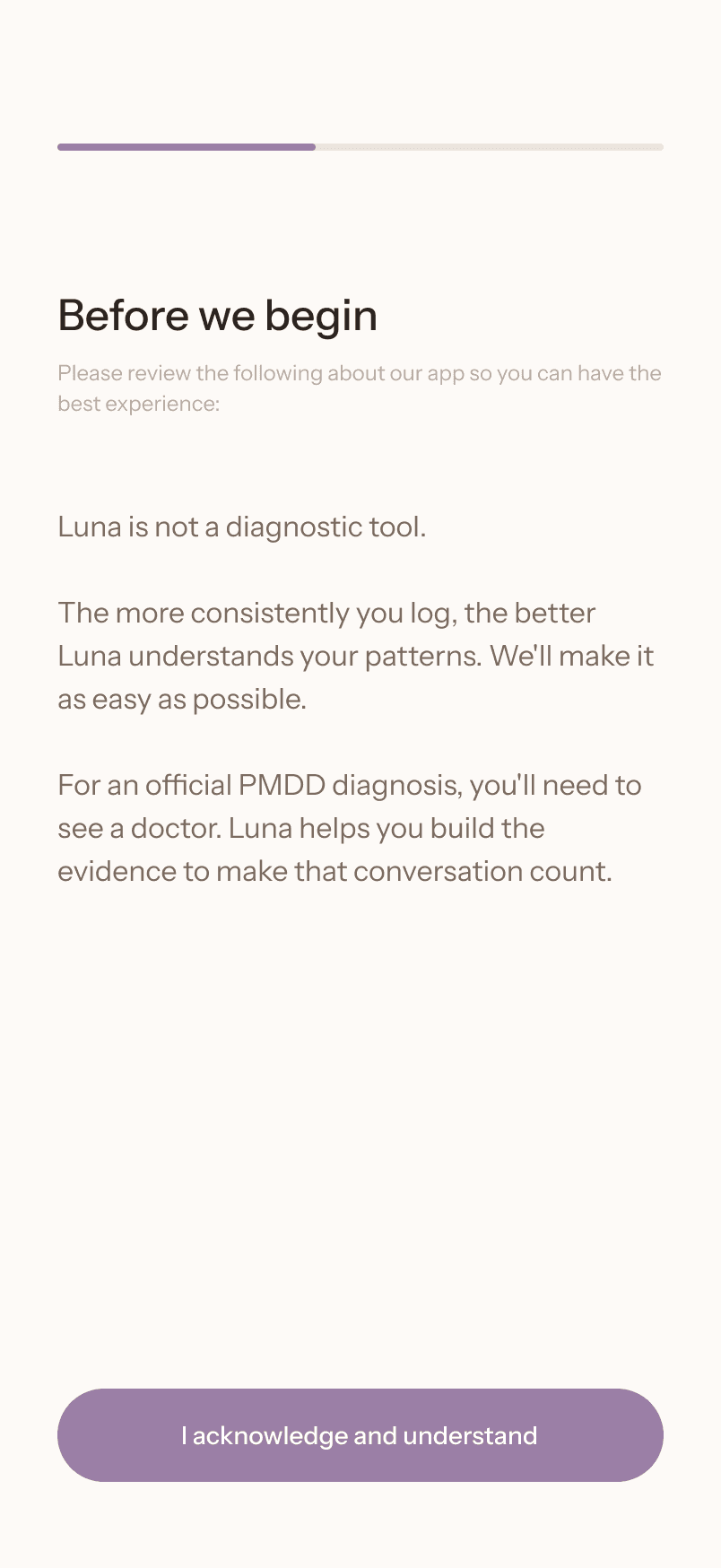
The key sequencing decision was the trust contract. It comes last deliberately — screen 7 of 8. By the time the user reaches it, Luna already knows their name, their age range, their cycle data, and their primary symptoms. The three statements — Luna is not a diagnostic tool, see a doctor for an official diagnosis, consistency helps Luna help you — feel like a commitment between two parties who have started a relationship, not a legal disclaimer on first encounter.
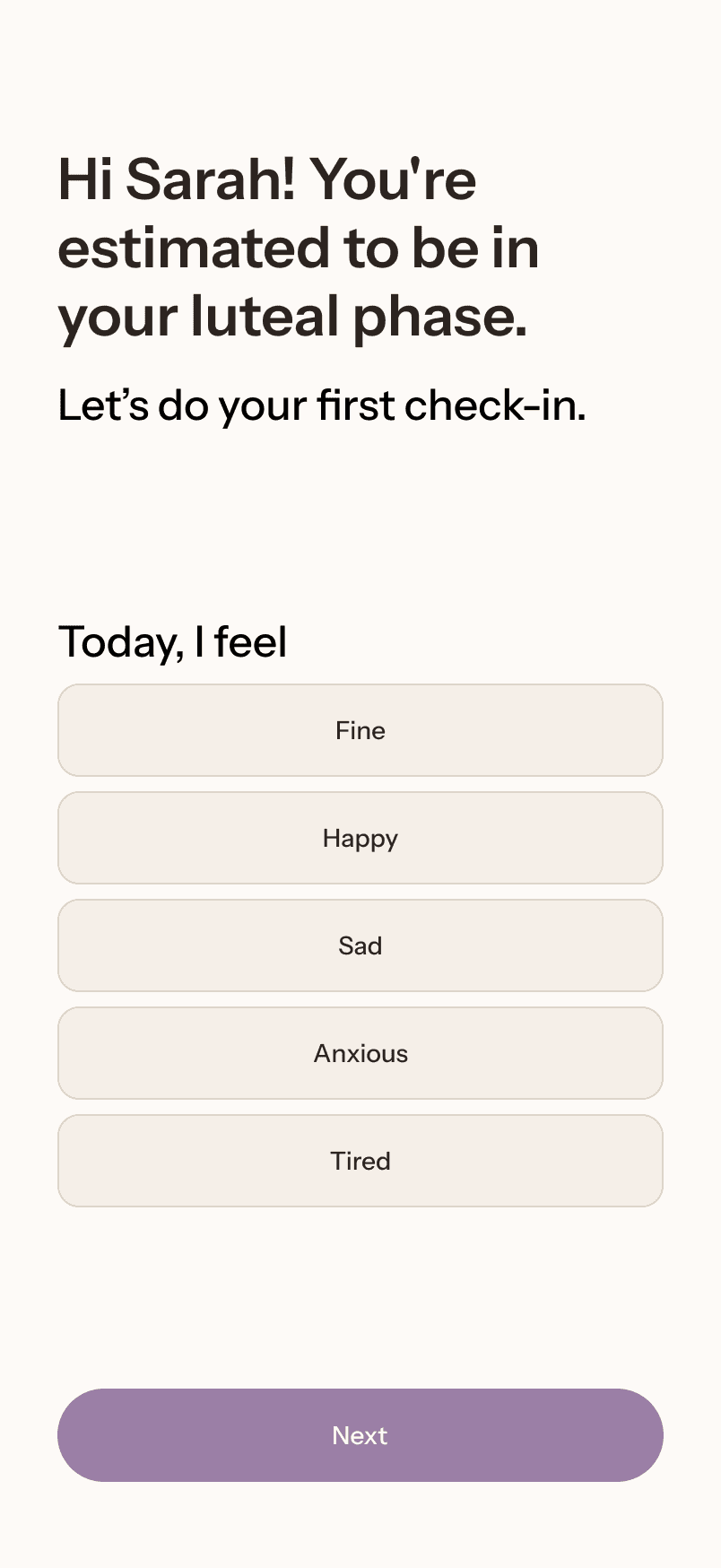
Screen 8 flows directly into the first log with no transition screen. Onboarding ends by doing, not reading.


An AI that learns your PMDD patterns — so you stop being surprised by your own cycle.
Premenstrual Dysphoric Disorder (PMDD) is a severe hormonal mood disorder that disrupts work, relationships, and daily life — cyclically, for years, and often without a diagnosis. On average, people with PMDD spend 12 years seeking answers. Luna is an AI companion that learns your individual symptom patterns over time, so you can prepare instead of react, and finally have the data to advocate for yourself with a doctor.
— Dr. Erin Brennand, CMAJ podcast, citing patient advocacy research.
People with PMDD see an average of six healthcare providers before anyone gets it right. Over a quarter are initially misdiagnosed with another psychiatric disorder entirely — bipolar disorder, generalized anxiety, major depression. Not because their symptoms aren't real. Because there's no test for PMDD. No biomarker. No blood panel that confirms it.
The only path to diagnosis is data. Three months of consistent, prospective symptom tracking is what the DSM-5 requires for a clinician to confirm PMDD. And yet the tools available to do that tracking were never built for this condition.

Clue is one of the top period tracking apps on the App Store. It does track symptoms, but it is not specific to PMDD. Its resources on the condition are buried in a content page under "Other Conditions."
For many people with PMDD, Clue becomes the default tool simply because nothing better exists — not because it was built for them. When the app wasn't designed with PMDD in mind, the entire experience reflects that: generic logging, no PMDD-specific insight, and nothing meaningful to bring to a doctor.

Period trackers tell you when your next cycle is coming. That's what they were designed to do. But PMDD isn't caused by abnormal hormones — research shows that people with PMDD have normal hormone levels. The difference is how their brain responds to normal hormonal fluctuations. That kind of pattern doesn't live in a date on a calendar.
So people do what they can — apps, paper trackers, describing symptoms from memory in a doctor's office. But memory is unreliable. According to PMDD researcher Dr. Erin Brennand, symptom histories reported retrospectively correlate with prospectively tracked data only about 60% of the time. Doctors are working from an incomplete picture.
Not by making logging easier. Not by adding more features. By making the return on logging felt earlier — and by reframing what tracking is actually for.
There is no blood test for PMDD. But there is a path to diagnosis — and it runs directly through consistent symptom data. Every entry a user logs in Luna is building the clinical picture a doctor needs to take them seriously. That's not a feature. That's the reason to show up every day.
Before designing anything, I needed to make sure this problem was as real and specific as I understood it to be.

Before I started even thinking about visual design, I spent four sessions in product thinking. The problem was clear. The approach needed to be just as specific.
Rather than inventing a symptom taxonomy, I grounded Luna's data model in the Her Mood Mentor Premenstrual Symptom Mapping Kit, developed by Jes Hagan, a certified nutritional therapy practitioner and PMDD specialist. Every symptom category, severity definition, and habit tracking approach in Luna comes directly from an established clinical framework.
One finding from this source reframed the entire product: there is no blood or saliva test for PMDD. Three months of consistent symptom tracking is the clinical path to diagnosis. Luna didn't need to manufacture a reason to log. The reason already existed. It just needed to be surfaced.

The research confirmed two things about PMDD users that became non-negotiable design constraints. If a decision violated either one, it didn't make it into the product.
Minimize cognitive load.
PMDD symptoms include brain fog, fatigue, and difficulty concentrating. The app will often be opened during or near symptomatic periods — the exact moments when thinking is hardest. Every interaction had to be designed for the worst-case cognitive state. A daily log completable in under 30 seconds. One tap as a valid minimum. No feature that required the user to analyze their own data.
Emotional safety.
The app never alarms, judges, or creates urgency. Cycle phase language is gentle and action-oriented. The severity scale uses warm terracotta rather than alarming red. The entry counter never resets — missing a day is data, not failure. On bad days, Luna acknowledges before it asks. Every time.

Early on I identified a real tension. Luna needed a community layer — a PMDD-specific space for peer support, shared patterns, and connection. But a community product and a pattern-tracking product are fundamentally different things to design. Doing both in v1 meant doing neither well.
Community is scoped to v2. Once users share the Luna tracking experience, they have something concrete in common: their own longitudinal data. A PMDD community built on top of shared tracking is far more valuable than a generic forum. The community earns its place after the core product exists.
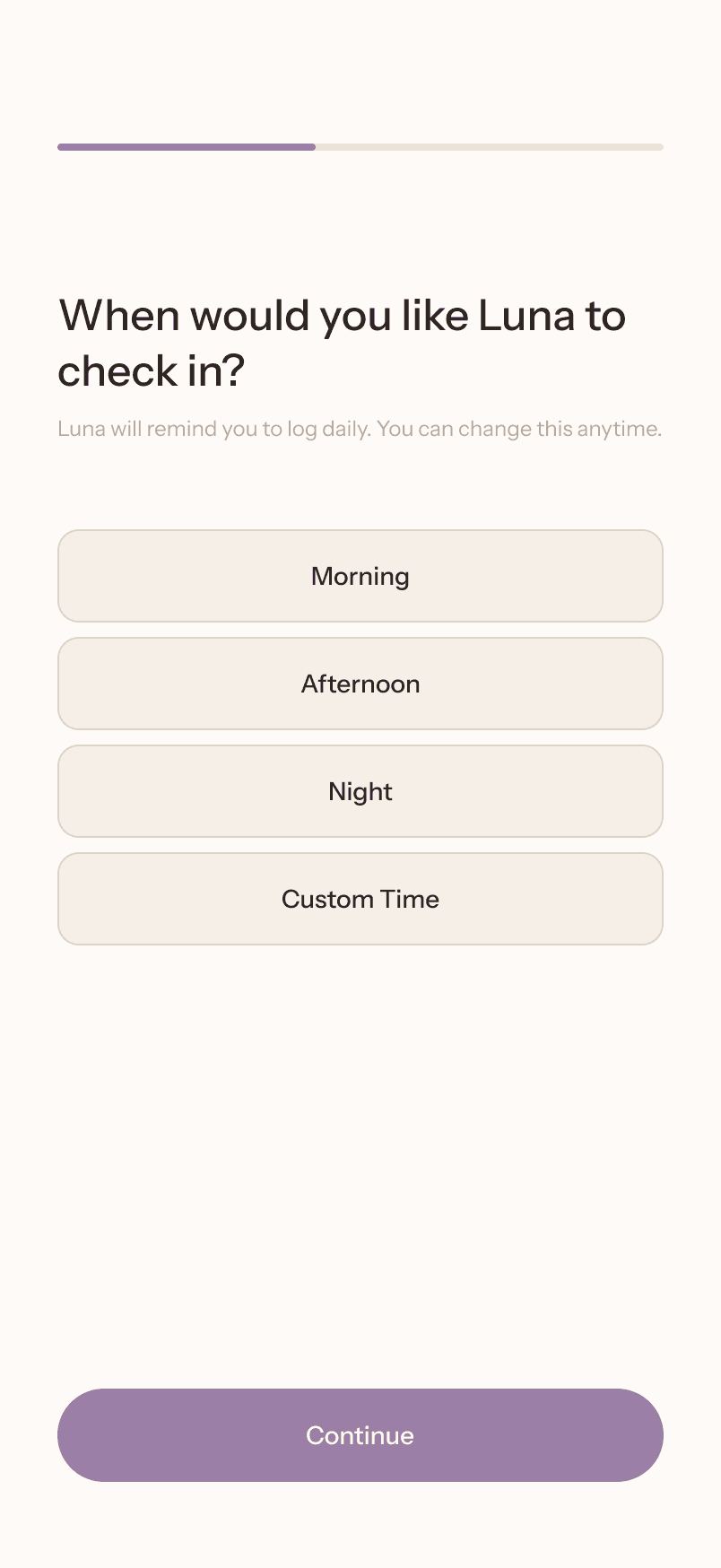
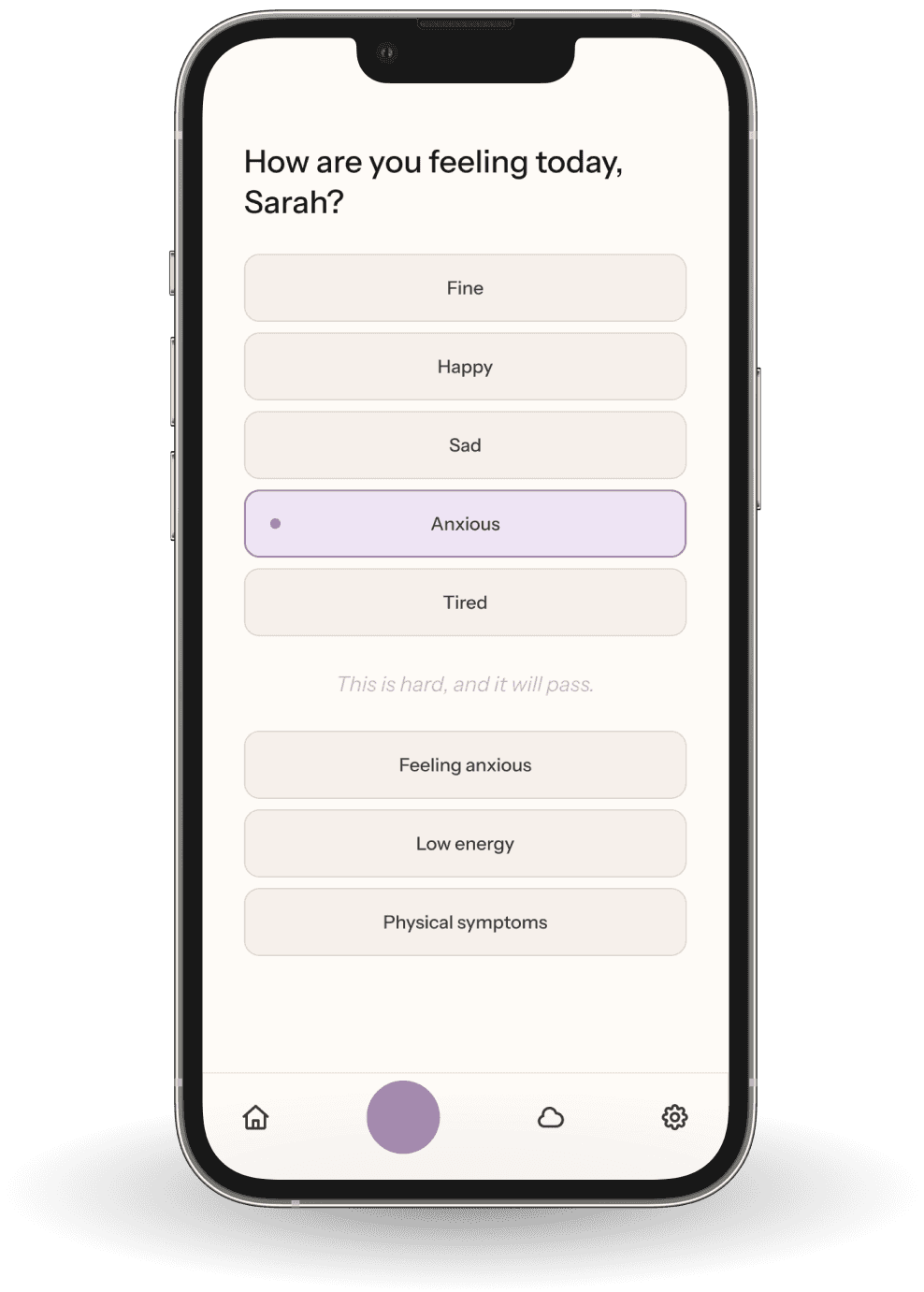
The onboarding flow has one job: get from knowing nothing about the user to having their first log entry — without losing them along the way. Eight screens, each earning its place.
The key sequencing decision was the trust contract. It comes last deliberately — screen 7 of 8. By the time the user reaches it, Luna already knows their name, their age range, their cycle data, and their primary symptoms. The three statements — Luna is not a diagnostic tool, see a doctor for an official diagnosis, consistency helps Luna help you — feel like a commitment between two parties who have started a relationship, not a legal disclaimer on first encounter.
Screen 8 flows directly into the first log with no transition screen. Onboarding ends by doing, not reading.


An AI that learns your PMDD patterns — so you stop being surprised by your own cycle.
Premenstrual Dysphoric Disorder (PMDD) is a severe hormonal mood disorder that disrupts work, relationships, and daily life — cyclically, for years, and often without a diagnosis. On average, people with PMDD spend 12 years seeking answers. Luna is an AI companion that learns your individual symptom patterns over time, so you can prepare instead of react, and finally have the data to advocate for yourself with a doctor.
— Dr. Erin Brennand, CMAJ podcast, citing patient advocacy research.
People with PMDD see an average of six healthcare providers before anyone gets it right. Over a quarter are initially misdiagnosed with another psychiatric disorder entirely — bipolar disorder, generalized anxiety, major depression. Not because their symptoms aren't real. Because there's no test for PMDD. No biomarker. No blood panel that confirms it.
The only path to diagnosis is data. Three months of consistent, prospective symptom tracking is what the DSM-5 requires for a clinician to confirm PMDD. And yet the tools available to do that tracking were never built for this condition.

Clue is one of the top period tracking apps on the App Store. It does track symptoms, but it is not specific to PMDD. Its resources on the condition are buried in a content page under "Other Conditions."
For many people with PMDD, Clue becomes the default tool simply because nothing better exists — not because it was built for them. When the app wasn't designed with PMDD in mind, the entire experience reflects that: generic logging, no PMDD-specific insight, and nothing meaningful to bring to a doctor.

Period trackers tell you when your next cycle is coming. That's what they were designed to do. But PMDD isn't caused by abnormal hormones — research shows that people with PMDD have normal hormone levels. The difference is how their brain responds to normal hormonal fluctuations. That kind of pattern doesn't live in a date on a calendar.
So people do what they can — apps, paper trackers, describing symptoms from memory in a doctor's office. But memory is unreliable. According to PMDD researcher Dr. Erin Brennand, symptom histories reported retrospectively correlate with prospectively tracked data only about 60% of the time. Doctors are working from an incomplete picture.
Not by making logging easier. Not by adding more features. By making the return on logging felt earlier — and by reframing what tracking is actually for.
There is no blood test for PMDD. But there is a path to diagnosis — and it runs directly through consistent symptom data. Every entry a user logs in Luna is building the clinical picture a doctor needs to take them seriously. That's not a feature. That's the reason to show up every day.
Before designing anything, I needed to make sure this problem was as real and specific as I understood it to be.

Before I started even thinking about visual design, I spent four sessions in product thinking. The problem was clear. The approach needed to be just as specific.
Rather than inventing a symptom taxonomy, I grounded Luna's data model in the Her Mood Mentor Premenstrual Symptom Mapping Kit, developed by Jes Hagan, a certified nutritional therapy practitioner and PMDD specialist. Every symptom category, severity definition, and habit tracking approach in Luna comes directly from an established clinical framework.
One finding from this source reframed the entire product: there is no blood or saliva test for PMDD. Three months of consistent symptom tracking is the clinical path to diagnosis. Luna didn't need to manufacture a reason to log. The reason already existed. It just needed to be surfaced.

The research confirmed two things about PMDD users that became non-negotiable design constraints. If a decision violated either one, it didn't make it into the product.
Minimize cognitive load.
PMDD symptoms include brain fog, fatigue, and difficulty concentrating. The app will often be opened during or near symptomatic periods — the exact moments when thinking is hardest. Every interaction had to be designed for the worst-case cognitive state. A daily log completable in under 30 seconds. One tap as a valid minimum. No feature that required the user to analyze their own data.
Emotional safety.
The app never alarms, judges, or creates urgency. Cycle phase language is gentle and action-oriented. The severity scale uses warm terracotta rather than alarming red. The entry counter never resets — missing a day is data, not failure. On bad days, Luna acknowledges before it asks. Every time.


Early on I identified a real tension. Luna needed a community layer — a PMDD-specific space for peer support, shared patterns, and connection. But a community product and a pattern-tracking product are fundamentally different things to design. Doing both in v1 meant doing neither well.
Community is scoped to v2. Once users share the Luna tracking experience, they have something concrete in common: their own longitudinal data. A PMDD community built on top of shared tracking is far more valuable than a generic forum. The community earns its place after the core product exists.
The onboarding flow has one job: get from knowing nothing about the user to having their first log entry — without losing them along the way. Eight screens, each earning its place.
The key sequencing decision was the trust contract. It comes last deliberately — screen 7 of 8. By the time the user reaches it, Luna already knows their name, their age range, their cycle data, and their primary symptoms. The three statements — Luna is not a diagnostic tool, see a doctor for an official diagnosis, consistency helps Luna help you — feel like a commitment between two parties who have started a relationship, not a legal disclaimer on first encounter.
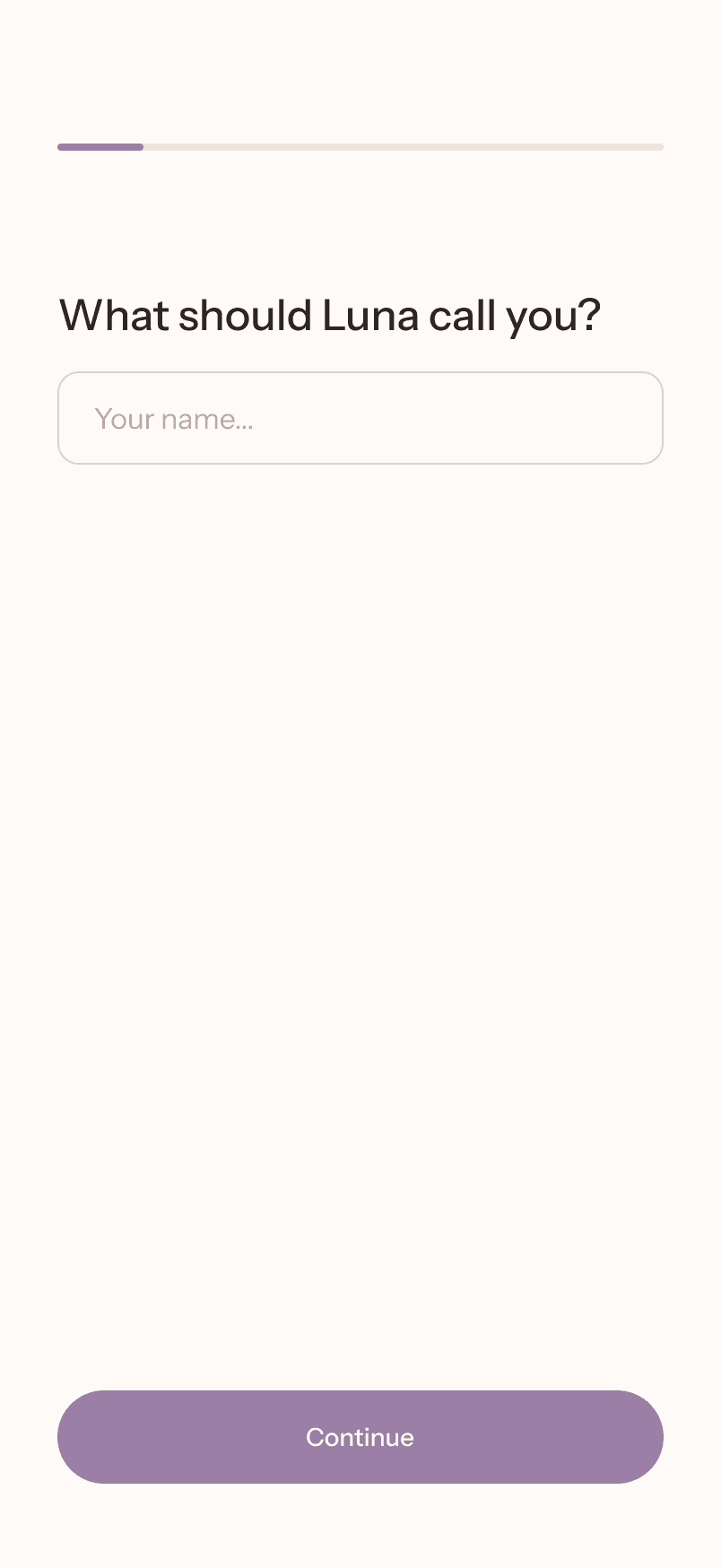
Screen 8 flows directly into the first log with no transition screen. Onboarding ends by doing, not reading.